Instructions Relating to Information Relevant to ALL Manuscripts
Preparation of ALL Articles
Online Manuscript Submission Procedures
NOTE: TMB = Therapeutic Massage and Bodywork. The scope of the IJTMB and each of the journal sections can be found on the About page.
THERAPEUTIC MASSAGE AND BODYWORK (TMB)
Publication guidelines for this journal adhere to the International Committee of Medical Journal Editors’ (ICMJE) Uniform Requirements for Manuscripts Submitted to Biomedical Journals(see www.icmje.org). These requirements speak to the ethical and technical aspects of scientific research and publishing, and where appropriate are augmented at a more detailed level in (a) the AMA Manual of Style (11th ed.) and (b) subsequent sections on this webpage. Any differences between precise recommendations from the Uniform Requirements and AMA Manual of Style shall be resolved by prioritizing the Uniform Requirements.
The IJTMB accepts many types of articles. The following are some suggested guidelines for the various types:
ETHICAL RESPONSIBILITY
All research is to be conducted in an ethical and responsible manner. Details and reporting requirements are embedded in the Methods section of the Article, below. Please carefully review the full ethical statements/requirements and links provided there.
Recommended Reporting Guidelines
There are several reporting guidelines available for different types of studies. Developed by international teams and driven by a need to ensure transparency and consistency of reporting, the IJTMB expects authors to use these international reporting guidelines; articles not meeting basic reporting guidelines will be returned to authors for revisions to conform to guidelines before being accepted for review. For a full list, please visit the EQUATOR Netowrk: Enhancing the QUAlity and Transparency Of health Research, www.equator-network.org. We recommend including a statement about following the appropriate reporting guideline in the manuscript, and in the cover letter to the editor upon submission. Including the checklist used with your manuscript submission, showing addressed items, is optional but appreciated.
The guidelines include:
CONSORT: Consolidated Standards of Reporting Trials. Applicable to many forms of TMB research
Authors are advised to use the CONSORT (Consolidated Standards of Reporting Trials) reporting guidelines for randomized controlled trials, and particularly the CONSORT Extension for Non-Pharmaceutical Interventions. The application of CONSORT guidelines to all forms of research will ensure manuscripts include items which are expected for full and appropriate reporting of TMB research. For clinical trials this includes a client/patient flow diagram.
RECOMMENDATION TO REGISTER CLINICAL TRIALS
As designated in the Uniform Requirements (Section III.J.), “the ICMJE believes it is important to foster a comprehensive, publicly available database of clinical trials. The ICMJE defines a clinical trial as any research project that prospectively assigns human subjects to intervention or concurrent comparison or control groups to study the cause-and-effect relationship between a medical intervention and a health outcome. Medical interventions include drugs, surgical procedures, devices, behavioral treatments, process-of-care changes, and the like” (www.icmje.org). The ICMJE advocates that (a) the public trials registry used include a minimal registration data set spanning 20 criteria (see World Health Organization Technical Consultation on Clinical Trials Registration) and (b) the trial registration number be designated at the end of the manuscript’s abstract. Additional guidance regarding this recommended registration process for prospective authors of clinical trial manuscripts is available at the following sources: ICMJE’s “Questions about Clinical Trials Registration” and ClinicalTrials.gov.
The IJTMB considers TMB interventions to be included in the aforementioned definition. Thus, for research involving TMB clinical trial interventions, Trial Registration information such as trial registry name, registration, & URL of the registry will be expected. If the trial was not registered, an explanation must be provided in the submission cover letter to the Executive Editor.
PRISMA: Preferred Reporting Items for Systematic reviews and Meta-Analyses and ENTREQ: ENhancing Transparency in REporting the synthesis of Qualitative research
PRISMA provides reporting guidelines to ensure inclusion of essential features that should be presented in manuscripts of systematic reviews and meta-analytic studies. ENTREQ: provides the parallel guidelines for manuscripts involving the synthesis of qualitative research manuscripts.
COREQ: COnsolidated criteria for REporting Qualitative research
This checklist helps researchers to report report the key items of relevance for qualitative research projects, covering research team and reflexivity, study design, and data analysis and reporting.
CARE: Consensus-based clinical CAse REporting
The CARE guidelines address completeness, transparency, and data analysis relevant to the reporting in case reports and point-of-care data. www.care-statement.org/ The IJTMB has published recommended adaptations to the CARE Guidelines specific to therapeutic massage and bodywork.
SAMPL: Statistical Analyses and Methods in the Published Literature
These are reporting guidelines for statistical analyses. The document is available here: SAMPL-Guidelines-6-27-13.pdf
PREVIOUS OR DUPLICATE PUBLICATION
In the submission cover letter to the Editor, give full details on any possible previous or duplicate publication of any content of the manuscript, including degree of overlap. Previous or duplicate publication includes all forms of potential distribution of manuscript material outside of the research team for any purpose excluding peer review in preparation of the manuscript. Previous publication of some content of a paper does not necessarily preclude its being published, but members of the Editorial Board need information about previous publication when deciding how to use space in the journal efficiently; they regard failure of full disclosure by authors of possible prior publication as a breach of scientific ethics. Please send a copy of any document that might be considered a previous publication via email to the Executive Editor, or provide this document during the submission process as a Supplementary file.
PUBLIC KNOWLEDGE PROJECT'S (PKP) OPEN JOURNAL SYSTEM (OJS) SOFTWARE SPECIFICATIONS
The journal adheres to an electronic and open access format based on the Open Journal System (OJS) software application package developed in conjunction with Canada’s Public Knowledge Project. Documentation for this software is available online.
LANGUAGE EXPECTATIONS
Submissions are expected to be in good English (British/Canadian/Australian or American is accepted, but not mixed). While the journal encourages manuscript submissions from around the world, manuscript review and copyediting is not a substitute for proper writing. If you have concerns, please either communicate with the Executive Editor before your submission, or work with a language/writing editor before submission.
DOCUMENT LAYOUT
Document type: Manuscripts must be in Microsoft Word format (.doc version 2 and above or .docx) or Rich Text Format (.rtf). If you are using any other word processing program, you must save the file as an .rtf, .doc, or .docx.
Paper and margins: Paper size should be US Letter, 21.202 cm x 27.83 cm (8.5 inches x 11 inches). The top margin on the title page should be 5.08 cm (2 inches) deep; all other pages, the top margin should be 2.54 cm (1 inch). The other (right, left, and bottom) margins should all be 2.54 cm (1 inch).
Text: All text should use some version of the font Times New Roman. All document text should be in 10 point font, except the title at 18 point font. Do not hyphenate at the end of a line. Use double spacing throughout, including the references, tables, and figure legends. All pages should be numbered consecutively, starting with the Title page.
Line numbering: Turn on line numbering if your word processor has that capability. This will facilitate communication between the authors, reviewers, and editors.
Start on new page: After the title page, the abstract, article body, references, and authors’ contributions sections should each begin on a separate page. Other sections do not need to begin on a separate pages, but are to follow in the order listed in these guidelines. Use bold font to show headings and bold italicized subheadings throughout the manuscript.
SERIATION
Lists within text (sentence seriation) should use sequential lower case letters contained within parenthesis. E.g., (a) text; (b) text; etc. When pulled out into distinct lists (paragraph seriation), each point can be preceded either by a round or square bullet and a space (when specific ordering or enumerating of the points is not important) or a sequential Arabic numeral followed by a period and a space. Paragraph seriations should be indented from the left text margin by a ½ inch, and subparagraph seriations (used judiciously) indented an additional ½ inch, with small case letters followed by a period.
E.g.,
FIGURES AND TABLES
Figures and Tables must be submitted as separate Supplementary files. Details are in the Preparation of Supplementary Files, after this section on preparing the manuscript.
UNITS OF MEASUREMENT AND ABBREVIATIONS
Use the International System of Units (SI) for units of measurement, such as length, weight, or volume, throughout the manuscript. If you indicate units other than the SI units, they may be shown in parentheses after the SI unit (e.g., 30.48 cm (1 foot)). Do not explain abbreviations for units of measurement (e.g., 3mL, not 3 milliliters (mL)) or standard scientific symbols (Na, not sodium (Na)).
The full term for which an abbreviation stands should precede its first use in the text unless it is a standard unit of measurement. Do not use abbreviations in the title, or abbreviations that have other standardized use.
URL ADDRESSES
URL addresses in the text should be activated and ready to click.
PLACE NAMES
As an international journal, for the first reference to a place, please include the country name as well as the city or province/state designations (as relevant). For example, either of the following are acceptable: We recruited participants in the city of Oaxaca, Mexico... or We recruited participants in the state of Oaxaca, Mexico...
TITLE PAGE
The title page includes: the article title; authors’ names followed by their highest academic/professional degree(s), then the authors’ institutional department and affiliation; contact information for the corresponding author(s) (postal, email, and indication of whether the author consents to the publishing of the email); and a running head or foot line consisting of: Head author (last name), et al. (if appropriate), and a colon followed by a brief version of the title (approximately 40 characters).
Nota Bene: Given the double-blind nature of the peer-review process used for manuscript consideration, the Title Page (page one) must not be included with the original submission. This page should be placed at the beginning of the manuscript only after it has been accepted and the author is instructed to upload a version for copyediting.
Title: Article titles should be concise while effectively conveying the topic and specifics that will aid immediate understanding of the article, including research design and population when appropriate.
Authorship: Only those individuals who contributed directly to the intellectual content of the paper should be listed as such, with the implication that all of the following criteria have been met by the author(s) listed: (a) conceived and planned the work that led to the report; (b) wrote the paper, or reviewed successive versions and took part in the revision process; and (c) approved the final version. Holding positions of administrative leadership, contributing clients, and collecting and assembling data, are not, by themselves, criteria for authorship. Other persons who have made substantial, direct contributions to the work but cannot be considered authors should be acknowledged with their permission.
ABSTRACT PAGE
The Abstract page begins with the abstract, followed by the subsequent sections: key words; the word counts of abstract and body text; the number of figures and tables; and the conflict of interest statement.
Abstracts: Abstracts are critical summaries of the work, indexed in many databases, and the primary introduction of the work to readers. They must concisely and accurately reflect the work. Abstracts are not required for entries in the Commentaries and News/Announcements parts of the journal.
Structured abstracts are to be no more than 300 words. For reports of quantitative original data, the following format applies: Background, Purpose, Setting, Participants, Research Design, Intervention, Main Outcome Measure(s), Results including specific effect sizes and statistical significance if possible, and Conclusions. For clinical trials, also include Trial Registration information such as trial registry name, registration, & url of the registry. For reports of systematic reviews & meta-analyses, adhere to the following structure: Background, Purpose, Data Sources, Study Selection, Data Extraction, Results, and Conclusions. For reports of qualitative data, the following format applies Background, Purpose, Setting, Participants, Research Design, Results, Conclusions. Review the recommendations from CONSORT/PRISMA as appropriate. Abstracts for other types of submissions should concisely explain the core material of the manuscript in a logical manner that reflects the sequential presentation in the manuscript.
Keywords: Include 3 to 10 key, distinct words or short phrases that readers will use when searching for your article within databases, with reliance on the Medical Subject Headings (MeSH) of the National Library of Medicine. As MeSH is not precise regarding therapeutic massage and bodywork (TMB) names and techniques, standard TMB terminology with key relevance to the article can also be used if the terms are representative and would be understood and/or commonly searched. Separate terms with a semi-colon and a space (e.g., term1; term2; term3) and do not capitalize them.
Conflict of Interest Notification: To prevent ambiguity, authors must state explicitly whether potential conflicts do or do not exist.
Conflict of interest exists when an author, reviewer, or editor has financial or personal relationships that could inappropriately bias or compromise his or her actions (such relationships are also known as dual commitments, competing interests, or competing loyalties). More specifically, the following considerations are illustrative and would need to be addressed: (a) Authors should identify individuals who provide writing or other assistance and disclose the funding source for this assistance. (b) Investigators must disclose potential conflicts to study participants and should state in the manuscript whether they have done so. (c) Authors should describe the role of the study sponsor(s), if any, in the study design; in the collection, analysis, and interpretation of the data; in the writing of the report; and in the decision to submit the report for publication. If the supporting source had no such involvement, the authors should so state. (d) Editors may request that authors of a study funded by an agency with a proprietary or financial interest in the outcome sign a statement such as, “I had full access to all of the data in this study and I take complete responsibility for the integrity of the data and the accuracy of the data analysis.”
Such perceived conflicts--or their absence in a study-- must be disclosed by the author via the Comments to the Editor route when the manuscript is submitted.
MAIN BODY OF TEXT
Research Manuscripts: The standard Introduction, Methods, Results, and Discussion (IMRAD structure) described below arises from the natural progression of the research process. The structure is best for qualitative, quantitative, mixed methods, and reviews research. From this point, the following headings will be expected for all research articles: Introduction, Methods, Results, Discussion, References, Acknowledgements, Creative Commons License. Use subheadings as appropriate (bold italics) to help guide readers through the pertinent grouping of information.
Non-research Manuscripts: Manuscripts submitted for consideration in the Journal’s Education Section and Practice Section often represent expository descriptions, conceptualizations, interpretations, or disputations of issues in the massage and bodywork profession, though these sections can also include section-specific research manuscripts. Non-research articles do not need to use the research formatting. However, considerable attention must be given to the necessity for critical reasoning in and professional literature support of one’s assertions. Such articles should have a logical development and flow, and should consider and apply the rationale of the guidelines for relevant sections as described below, i.e., (a) the four major sectional headings of Introduction, Method, Results, and Discussion and (b) the follow-up sections of References, Tables, Figures, etc. If the manuscript’s topic does not lend itself conveniently to the IMRAD structure, then a deductive, inductive, or hybrid narrative development is encouraged. Other article types such as Letters to the Editor, reactions to published articles, book reviews, and Editorials may also be submitted. Where applicable, the previously-cited need for critical reasoning and literature support of one’s position is essential. The format here is open-ended.
Use subheadings as appropriate (bold italics) to help guide readers through the pertinent grouping of information.
INTRODUCTION
This first of four parts comprising the main body of the article body provides the literature-based background or context of the research problem area, the significance of the problem, the purpose of the study couched in terms of the research question or objective, and the rationale for and statement of the research hypothesis. Both the main and secondary objectives should be stated. Key primary references should link the article topics to the larger body(s) of work to which the research relates.
METHODS
This part of the report’s main body includes all information pertinent to the development and implementation of the research. It should only include information relevant to the research plan up to the point of implementation. Information obtained during the study, including unplanned but needed changes to the protocol(s), are part of the study Results.
For Research including case studies, clearly identified methods subsections should include:
Participants: This section describes the selection and description of the Participants, eligibility and exclusion criteria; the source population and recruitment; when relevant, explain the selection for certain variables; and if need how some selection criteria were assessed.
Intervention: This section includes all technical information regarding the operational/implementation methods and research process. Include subsections as relevant to the research method(s) used. These may include: apparatus/instrumentation including Outcome Measures used, with additional brief descriptions of the relevance of the instruments(s), their history of use in the population, the scoring of the outcome or instrument, and when applicable, clinical relevance of the outcome measure (e.g., a reduction of X using the Tool Y is considered a clinically relevant reduction in symptom Z). Careful description of the Procedures so as to allow replication of the study, including the source/development of interview guides, or a comprehensive description of the practitioners providing the treatments and the treatment protocols/quality assurance methods used in the research (see CONSORT statement and extensions for more details).
Analysis: This section describes how the results are derived. For qualitative work, this entails the theoretical placement of the qualitative method being used along with the specific processes through which the results are derived. For quantitative work, this section provides enough detail that readers can feel confident that the correct analyses were done, and could replicate the results if they had access to the data. Reporting therefore should include sufficient details appropriate and expected for the statistical methods used, inclusive of confidence interval and effect size calculations, and familywise error rate corrections, to augment null hypothesis significance testing. It should be clear how p-values and outcomes fit within context of the relevance of the effect size being measured. Include key references about the methods used, and of the computer software employed. Define the statistical terms, abbreviations, and symbols.
For reviews, the manuscript should follow the PRISMA guidelines, describing the methods used for searching, selecting/reviewing, extracting, and synthesizing the data found.
Ethical Review and Consent: All researchers are responsible for appropriate ethical considerations. All manuscripts of research involving humans must state the name of the ethical review board that approved the research project being reported or supplied a statement of exemption. This includes any surveys intended to produce generalizable/useable knowledge about or for TMB professions or practitioners. For case reports, and practice or education-based manuscripts when applicable, explicitly state that the person(s) referenced in the manuscript have given informed consent for inclusion. For case reports, statements of informed consent must include the research/treatment process, the writing of the case, and of any images that are used. Authors must ensure the confidentiality of the persons involved in the research is maintained at all times, unless the participant(s) explicitly consents to the publication of identifying information.
Additional guidelines regarding ethical concerns for human participants and animal subjects involved in research, educational, and/or practice activities are available at the following sources:
(a) World Medical Association’s Helsinki Declaration of 1975;
(b) Office for Human Research Protections
(c) the American Massage Therapy Association; and
(d) the American Psychological Association (see both http://www.apa.org/ethics/code.html and http://www.apa.org/science/anguide.html.
RESULTS
This part of the report’s main body provides as appropriate quantitative results via descriptive or inferential statistics or both, and/or qualitative results. The results should adhere to a logical and coordinated sequencing of text, tables, illustrations, and/or quotes with an effort to avoid unnecessary repetition in the narrative of the data displayed in the tables and illustrations—use the text to highlight the most important observations.
All results should describe the participants on which the research is based. Quantitative results should give absolute numbers as well as derived values. Statistical results should be reported in a manner consistent with established reporting expectations for the statistical test(s) used. Avoid the use of non-technical descriptive terms, e.g., “significant” and “correlation” that have very precise statistical meaning. Do use tables, graphs, and figures to succinctly present complex or inter-related data that are needed to communicate the results or support the argument of the work.
Results sections should include a statement regarding number and, when applicable, type of adverse events.
DISCUSSION
This fourth and final part of the report’s main body focuses on new and important features of the study as well as the justifiable conclusions that follow from them. Rather than repeating data or other information from the earlier Introduction or Results sections, this section provides the following coverage: a succinct summary of the main findings of the study; an exploration of the plausible explanations or mechanisms of the findings; the placement of those results in context (related research, relevance to practice, etc.); a comparison and contrasting of the results with other pertinent studies acknowledged earlier in the report; careful consideration of the limitations and delimitations of the study; and an exploration of the implications of the study’s findings for future research and clinical practice.
Conclusions, the final subsection of the Discussion, should both link the results to the original hypothesis and goals of the research, summarize the key message(s) of the research, and focus the reader on the key messages for next steps.
Many TMB practitioners have an interest in research but struggle with the application of the results to clinical practice, where patients are more variable, may have other confounding comorbidities, and whose condition or tissue of interest may only be similar to that of the research. Consideration of this issue should help guide explanation of the limitations and delimitations as well as suggest avenues for the exploration of applying the research results to practice. In other words, authors are encouraged to increase the knowledge translation and transference of their research.
REFERENCES
Please use the AMA style of referencing.
If you are using citation software, the “AMA” style is most appropriate.
The IJTMB strongly encourages authors to use professional literature citations of key materials from recognized genres of scholarly publications such as peer-reviewed journal articles and authored or edited books rather than secondary sources or long lists of illustrative references.
Nota Bene: With the double-blind nature of the peer-review process in mind, author identification must be removed from all parts of the submission. It is not necessary to substitute the term “Author” in place of the author’s surname in bibliographic citations and footnotes; however, this relaxing of an earlier demand on authors makes it even more imperative that authors refrain from using the first person singular or plural voice in the manuscript’s narrative.
DO:
Do not use ibid. or op cit.
Generic Samples & Minimum Acceptable Data for Basic References:
Journals: List all authors when six or fewer; when seven or more, list only the first six and add et al.
Print: Author(s) (Last name InitialInitial,). Article title. Journal Name [using National Library of Medicine abbreviations]. Year;vol(issue No.):inclusive pages.
Online: Author(s) (Last name InitialInitial,). Article title. Journal Name [using National Library of Medicine abbreviations]. Year;vol(issue No.):inclusive pages. URL. Published [date]. Accessed [date].
Books: List all authors when six or fewer; when seven or more, list only the first six and add et al.
Print: Author(s) (Last name InitialInitial,). Book Title. Edition number (if it is the second edition or above). City, State (or Country) of publisher: Publisher’s name; copyright year.
Book Chapter: Author(s) (Last name InitialInitial,). Chapter Title. In: Editor(s), ed(s). Book Title. Edition number (if it is the second edition or above). City, State (or Country) of publisher: Publisher’s name; copyright year:inclusive pages.
Online: Author(s) (Last name InitialInitial,). Book Title. Edition number (if it is the second edition or above). City, State (or Country) of publisher: Publisher’s name; copyright year. URL. Accessed [date].
Website: Author (or, if no author is available, the name of the organization responsible for the site). Title (or, if no title is available, the name of the organization responsible for the site). Name of the Web site. URL. Published [date]. Updated [date]. Accessed [date].
Specific Sample References:
Journals: List all authors when six or fewer; when seven or more, list only the first six and add et al.
Books: List all authors or editors when six or fewer; when seven or more, list only the first six and add et al.
Specific Samples of Electronic Source References:
Online Journal Articles:
Web Sites:
AUTHORS' CONTRIBUTION
Briefly list, using each author’s initials, the contributions each author made in the study development, design, implementation, analysis, and writing.
ACKNOWLEDGMENTS
This part of the manuscript recognizes any non-authors who made substantial contributions to the work, including any advisors, colleagues, or contributors. Authors should obtain permission to acknowledge from all those mentioned in the Acknowledgments.
Acknowledgements also includes details of the Project Funding: Sources of outside support for research, including funding, equipment, and drugs, must be named in the manuscript. The Conflict of Interest section will include the role(s) of the funding organization, if any, in the collection of data, its analysis and interpretation, and in the right to approve or disapprove publication of the finished manuscript must be described.
Place the following as the last statement in the submitted article:
Creative Commons Attribution-NonCommercial-NoDerivs 3.0 License—
In the published article, that statement will be linked to the complete Creative Commons License statement. All articles published in the IJTMB are licensed under the Creative Commons Attribution-NonCommercial-NoDerivs 3.0 License (see http://creativecommons.org/ and http://creativecommons.org/licenses/by-nc-nd/3.0/ ). Accordingly, the following conditions apply: (a) Copyright for articles published in this journal is retained by authors, with first publication rights granted to the journal. (b) By virtue of their appearance in this open access journal, articles are free to use, with proper attribution, in educational and other non-commercial settings. (c) Derivative works are not allowed in that a user may not alter, transform, or add additional content to an article published in this journal.
TABLES
All tables should be submitted as one supplementary word processor document, not as graphics or picture files. Each table should be centered and numbered consecutively on a separate page. Create the table using the tools in the word processor. Do not embed tables created in spreadsheets or other software packages.
Each table should be numbered in sequence using Arabic numerals (e.g., Table 1, 2, 3, etc.) Tables should have a title that summarizes the whole table, maximum 15 words. Titles and text should use double-spaced 10-point font. Short titles should be centered above the table. Longer titles should have margins that match the table width.
Use horizontal lines in tables to delimit the top and bottom of the table and column headings. Use vertical lines to delimit the left and right borders. Do not otherwise use internal horizontal or vertical lines. Each column should be provided with a brief explanatory heading, with units of measure clearly indicated.
Where appropriate, tables should display confidence intervals, relevant statistical measures of variation, and effect sizes to augment the reported test statistic p values. Detailed explanations or table footnotes should be typed directly beneath the table. Footnotes to a table should be indicated by superscript, lowercase letters.
Authors are asked to keep each table to a reasonable size; very large tables packed with data simply confuse the reader. Tables containing backup data can be made available to the readers directly from the author. A statement to that effect can be included in the data; the Table must be added at the end of the Table supplementary file for distribution to the reviewers. Data should not be reproduced in both tables and figures. Tables (along with their footnotes or captions) should be completely intelligible without reference to the text.
ILLUSTRATIONS (FIGURES)
Each illustration should be submitted as a separate supplementary file. Files should be titled and numbered consecutively as they are referenced in the manuscript. Illustrations should be professionally drawn or photographed, and should be as self-explanatory as possible. Previously published illustrations must acknowledge the original source, and the submission must include a written statement of permission to use the illustration from the copyright holder, unless such statement is not legally required (e.g., illustrations in the public domain). Signed statements of consent must also be submitted when photographs of potentially identifiable persons are used.
Monochrome images should be saved in grayscale mode; color images should be RGB. The print size of a figure should be commensurate with the amount and value of the information conveyed by the figure. Letters, numbers, or symbols on the illustrations should be clear and consistent, and of reasonable size for legibility when scaled to final print size. Figure Titles and Legends are submitted separately (see next section).
Only single layer images are acceptable; this is to prevent skewing if the images need to be resized. All images MUST be at or above intended display size, with the following image resolutions: Line Art 800 dpi, Combination (Line Art + Halftone) 600 dpi, Halftone 300 dpi. See the Image quality specifications chart for details. Image files also must be cropped as close to the actual image as possible. Tif and eps files are the most desirable form for printing and archiving, though pdf, jpg, or gif can be accepted if high resolution is maintained, no compression applied. 72 dpi/screen resolution images are not acceptable.
LEGENDS FOR ILLUSTRATIONS (FIGURES)
All figure titles and legends should be submitted as one supplementary word processor document. Each title should be centered and numbered consecutively on a separate page. The abbreviation “Fig.” for figure should appear first followed by the figure number and a period. A short title of the figure follows the figure number. If not embedded within the figure, a detailed legend may follow the figure title, with a maximum length of 300 words. When symbols, arrows, numbers, or letters are used to identify part of the illustrations, each should be explained clearly in the legend. The legends should permit the figures to be understood without reference to the text. If the figure has been previously published, the author should include a credit line for the figure in this file. In addition, the author should attach a permission letter as a Supplementary file to the submission.
PUBLISHER'S ARTICLE PREPARATION SERVICE FOR AUTHORS VIA MULTIMED, INC.
The journal’s publishing firm, Multimed, Inc., provides an article preparation service to authors once an article has been accepted. This service ensures compliance with the journal’s specific author guidelines/instructions, online manuscript submission procedures, and related OJS specifications for the entire publication process. If an author requires pre-submission editorial/writing assistance, please contact the IJTMB Executive Editor.
OVERVIEW
The following information will help you submit your manuscript for electronic submission to the International Journal of Therapeutic Massage & Bodywork’s web-based peer review system. The submission process can begin when completed copies of the manuscript and supplementary files (tables document, individual illustrations files, Legends document, and any others as identified as required above) have been prepared.
You will be able to monitor the progress of your manuscript through the peer-review process.
FINAL FILE PREPARATION
The initial submission of the manuscript must be anonymized. This has two steps.
Additionally, a “Comments to the Editor” document should be prepared to address any issues as identified above (such as conflicts of interest, duplicate publication, non-registration of a trial, etc.). Such cover letters often also address the fit between the manuscript material and the journal or the journal section the author wishes to submit the manuscript to, particularly if there is any question regarding the fit to the journal or the section. Comments to the Editor will be submitted as part of Step 1 of the submission process.
Online Manuscript Submission Procedures
USER ACCOUNT INFORMATION
Log on to the International Journal of Therapeutic Massage & Bodywork at www.ijtmb.org. Select the “Login” page. All authors, reviewers and editors must log in to use the system. If you are already registered with the system, you may login with a username and password. Select “User Home” on the upper bar, and under Function, select “Author” to submit an article or track the status of your current submissions.
If you want to submit an article and do not have a username and password, you must select the “Register Here” link to log in. Under Online Submissions, you should select “Go to Registration” link to register your username and password. After this, follow the instructions above to begin article submission.
<a href="#submission">SUBMISSION STEPS </a>
After selecting “Author”, you may submit an article by selecting “CLICK HERE” under the heading “Start a New Submission”, which will take you to the first step of the five-step process involved in submitting a manuscript. If you wish to track articles already submitted, click on the article title listed under Active Submissions.
Step 1: Starting the Submission. Under “Journal Section”, a drop down menu allows the selection of type of article. Under “Submission Checklist”, the author should review and check off each point, indicating the article has been prepared in the proper format and has not been previously published. Submissions may be returned to authors that do not adhere to these guidelines or that substantively deviate from these guidelines on the Author Guidelines page. Paste into the provided text box any “Comments to the Editor” you have prepared about aspects of this article for which they have been suggested; other comments to the editor you wish to submit are optional. Click on the “Save and continue” button to proceed to the next section.
Step 2: Uploading the Submission. Four steps (copied from the submission webpage) are required to submit the manuscript. Step 1. Click “Choose File” which opens a Choose File window for locating the manuscript file on the hard drive. Step 2. Locate the submission file and highlight it. Step 3. Click “Open” on the window, which places the address in the box on this page. Step 4. Click “Upload” on this page, which uploads the file from the computer to the journal’s website and renames it following the journal’s system. After clicking “Upload”, the upload window clears. The file can be viewed by clicking on the file name—a quick review will confirm you have uploaded the correct version of your manuscript. A new or revised file can be uploaded, deleting the one that currently appears. Click the “Save and continue” button to move to the next step.
Step 3: Entering the Submission’s Metadata. The first, middle, and last name of each author, affiliation, and email address are required for each author. An optional biographical statement may be added as well for each author. Spaces are provided for the Submission Title, the Submission Abstract, and the submission Keywords (separated by a semi-colon and space). Identify the manuscript language. A space is provided for the author to name Agencies that provided support for the work presented in the submission.
Step 4: Uploading Supplementary Files. An important feature of this publishing system is the ability to upload separate graphics files. Having separate graphics files facilitates the HTML markup of the article for online viewing. An additional advantage is its ability to post and index any number of supplementary files for each published investigation. These might include research instruments, data sets, information sources, etc. In addition, special permission to use figures, copyright release statements, may be included.
If you have no supplementary files, simply click on the “Save and Continue” button to move to the final step. Otherwise, four steps (identical to those of the manuscript submission step) are required to submit each supplementary file. Step 1. Click “Choose File” which opens a Choose File window for locating the manuscript file. Step 2. Locate the submission file and highlight it. Step 3. Click “Open” on the window, which places the address in the box on this page. Step 4. Click “Upload” on this page, which uploads the file from the computer to the journal’s website and renames it following the journal’s system. After clicking “Upload”, the upload window clears. The file can be viewed by clicking on the file name—a quick review will confirm you have uploaded the correct version of your supplementary file. A new or revised file can be uploaded, deleting the one that currently appears. Click the “Save and continue” button to move to the next step.
Step 5: Confirming the Submission. This step allows the author to review the submission for completeness, note the file(s) name change in the system, note the submission file size, and upload date. The author should click “Finish Submission” to confirm the upload.
REVISIONS
When you prepare a revised version of your manuscript, it is essential that you carefully follow any specific instructions given in the Editor's letter regarding preparation of the revised manuscript. The following are expected in preparation of the revised manuscript.
1. Any changes to the manuscript must be done with “track changes” turned on in the word processor being used.
2. A cover letter for the editor must be prepared that outlines
a) what changes were made in the manuscript/supplementary files to address reviewers’ suggestions or concerns; and
b) reasons why the remaining reviewers’ suggestions or concerns should not result in changes in the manuscript/supplementary files.
Failure to do so will cause a delay in the review of your revision and may result in the return of the revision to you, without review, for proper preparation.
Revisions received more than 3 months after requested may be sent for another review cycle, at the Editor's discretion. If a revision is not received within 6 months after requested, your file may be closed.
UPLOADING THE REVISION DOCUMENTS
Log into your account, as described above for submission of a new manuscript. Instead of clicking on “Start a New Submission”, click on the name of the manuscript under “Active Submissions”. The first page you are brought to is the “Summary” page.
Revised Supplementary Files: On the “Summary” page, look for the “Add a Supplementary File” link in the top “Submission” section. Use this link to upload any new versions of your supplementary files.
Revising Author information, the Title, Abstract, or Keywords: On the “Summary” page, look for the “Edit Metadata” link below the Submission Metadata title. This will take you to a page where you can edit the Metadata information.
Revised Manuscript: At the top of the page, below the Article ID Number (#XXX Summary) is a submenu: “Summary Review Editing”. Click on “Review”. At the bottom, within the “Editor Decision” section is a box where you can “Upload Author Version”. Click on the “Choose File” button to upload the revised manuscript.
NOTIFYING THE EDITOR THAT REVISED DOCUMENTS HAVE BEEN SUBMITTED, AND SUBMITTING THE COVER LETTER TO THE EDITOR
The system does not automatically inform the editor that revised documents have been submitted. Within the “Editor Decision” section where you uploaded the revised manuscript is a line for “Notify Editor”. On that line, to the right, there is a small white icon of a letter or note (not the speech bubble). Clicking on this icon will bring you to a “Send Email” page where you can write the Editor a brief note informing them that you have uploaded a revised manuscript and any revised supplementary files. On the Attachments line, you can upload the Cover letter to the editor. Once that is completed, click on the “Send” button found at the bottom left of the webpage.
If you do not do this step, it may be weeks before the Editor becomes aware that you have uploaded the revised documents, as the system does not highlight that change in status.
COPYEDITING
Once an editor has confirmed the manuscript has been accepted for publication, you must upload the final version that is to move into copyediting in preparation for publication. Copyediting will ensure the article conforms to the style and usage of the International Journal of Therapeutic Massage & Bodywork. This editing may be substantive. It is the responsibility of the corresponding author to read the copyedited manuscript he or she will receive and to answer all queries fully.
Critical Steps for Uploading the final version for submission to Copyediting:
Step 1: The author must add the prepared Title Page and Notification of Conflict of Interest Page to the manuscript before uploading the final version for copyediting.
Step 2: The author must use the same steps as for the submission of revised documents (above) to upload the final version and supplementary documents of the manuscript.
Step 3: The author must use the same steps as for the submission of revised documents (above) to inform the editor that the final version documents have been submitted.
Three issues to keep in mind:
Bibliography:
IJTMB Author Guidelines v1
Uniform Requirements for Manuscripts Submitted to Biomedical Journals: Manuscript Preparation and Submission: Preparing a Manuscript for Submission to a Biomedical Journal, accessed October 23, 2012, http://www.icmje.org/manuscript_1prepare.html;
Articles published in this journal are licensed under the Creative Commons Attribution-NonCommercial-NoDerivs 3.0 License (see http://creativecommons.org/ and http://creativecommons.org/licenses/by-nc-nd/3.0/ ). Accordingly, the following conditions apply: (a) Copyright for articles published in this journal is retained by authors, with first publication rights granted to the journal. (b) By virtue of their appearance in this open-access journal, articles are free to use, with proper attribution, in educational and other non-commercial settings. (c) Derivative works are not allowed in that a user may not alter, transform, or add additional content to an article published in this journal.
The names and email addresses entered in the International Journal of Therapeutic Massage & Bodywork journal site will be used exclusively for the stated purposes of this journal and will not be made available for any other purpose or to any other party. The data collected from registered and non-registered users of this journal falls within the scope of the standard functioning of peer-reviewed journals. The journal’s editorial team collects such information only insofar as is necessary or appropriate to fulfill the purpose of the visitor’s interaction with the journal. It includes information that makes communication possible for the editorial process; it is used to inform readers about the authorship and editing of content and it enables collecting aggregated data on readership behaviours. Data that will assist in developing this publishing platform may be shared with its developer Public Knowledge Project in an anonymized and aggregated form, with appropriate exceptions such as article metrics. The data will not be sold by this journal or PKP nor will it be used for purposes other than those stated here. The authors published in this journal are responsible for the human subject data that figures in the research reported here. Those involved in editing this journal seek to be compliant with industry standards for data privacy, including the European Union’s General Data Protection Regulation (GDPR) provision for “data subject rights” that include (a) breach notification; (b) right of access; (c) the right to be forgotten; (d) data portability; and (e) privacy by design. The GDPR also allows for the recognition of “the public interest in the availability of the data,” which has a particular saliency for those involved in maintaining, with the greatest integrity possible, the public record of scholarly publishing.
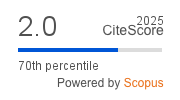
IJTMB's 2025 CiteScore
The IJTMB is the official journal of the Massage Therapy Foundation and the Registered Massage Therapists Association of British Columbia.


Support IJTMB continuously bringing you relevant scientific research and educational resources:

.png)




International Journal of Therapeutic Massage & Bodywork | eISSN 1916-257X
Official journal of the Massage Therapy Foundation and the Registered Massage Therapists Association of British Columbia.
Published by Multimed under the terms of a Creative Commons CC BY-NC-ND 3.0 License
Contact | Privacy Policy| Follow @ijtmb_org